


VDASH Guide
Volvo Tuning Explained
Engine performance optimization, EGR, DPF and lambda sensor deactivation.
Performance optimization
Engine performance optimization
This is an increase in engine performance, or tuning, which is possible by modifying the control software of the engine control unit, or by modifying some hardware parts of the engine. The supplier of software for petrol, diesel and hybrid vehicles for VDASH and D5T5.com is our Dutch colleague Obbe Van den Bijlaard – Obbetuning.nl. He has experience in the field of engine performance optimization for Volvo since 1995, when he started tuning the Volvo 850 model. To this day, thousands of satisfied customers around the world drive with his software. His thirty years of experience and name are therefore a guarantee of quality in themselves.
Volvo has typically produced and still produces vehicles with the same or very similar engines that have very different power outputs. This is not only for marketing purposes, but also for tax reasons – typically cars for Belgium and Germany. In these vehicles, it is possible to obtain the power of the software “unrestricted” engine version by a simple software modification. A typical example is the D5244T2 engine – 96 kW / 280 Nm, which is identical to the D5244T engine – 120 kW / 340 Nm, except for the software. Thanks to this, it is possible to increase the power from 96 kW to 120 kW, or increase it even further up to 147 kW / 470 Nm, for which this engine is designed without affecting its service life. Volvo continued to produce engine versions in this spirit in the following years as well. Thanks to the VDASH system, software modification of engine performance is very fast, simple and completely non-invasive for the engine control unit, since the software is uploaded through the OBD2 socket. Therefore, there is no need to remove or open anything from the vehicle, and the customer does not lose any possible vehicle warranty. To use VDASH, you will need a compatible Volvo DiCE diagnostic cable or our SUPER J2534, which you can purchase in our e-shop.
Engine, EGR and components
Engine behavior and recommended modifications
The increase in performance has a very positive effect, especially in combination with an automatic transmission, which shifts faster and earlier thanks to the higher torque, eliminating the impression of “confusion” when overtaking. Thanks to higher power at lower rpm, the engine does not rev as much, resulting in fuel savings, typically in the range of 0.5 to 3 liters per 100 km (in some petrol models – typically the 2.4T 147 kW engine).
When modifying diesel engines, we strongly recommend deactivating the EGR valve, or exhaust gas recirculation, because recirculation causes clogging of the intake manifold behind the opening of the pipe from the EGR valve back into the intake and a gradual reduction of the pipe diameter, which leads to reduced airflow. The vehicle then becomes “dull” on the accelerator pedal and fuel consumption increases. In extreme cases, this gradual clogging may end with an error message and engine limp mode. However, our EGR valve deactivation modification takes into account the preservation of its full functionality for correct READINESS code reading and a trouble-free technical inspection. The advantage of deactivating it is stopping the wear of the EGR itself and stopping the clogging of the intake manifold, which will help you avoid the need for its repair in the future.
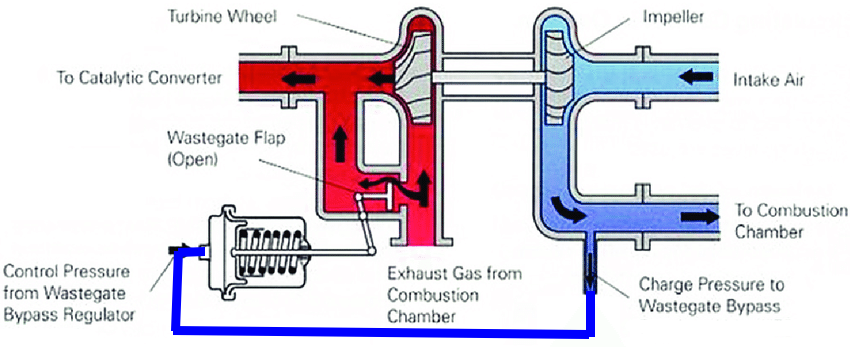
For petrol engines, special attention must be paid to the overall tightness of the piping from the mass air flow sensor, through the turbocharger and all the way to the engine intake valves. Any air leak causes irregular idle, increased rpm, etc. It is important that the crankcase ventilation is also in 100% condition and that no harmful overpressure or vacuum is created in the engine, which would affect the overall running of the engine. Last but not least, engine performance is affected by the condition of the spark plugs, their correct variant and also a 100% functional lambda sensor. For turbo engines, the correct setting of the pressure (preload) at which the WasteGate opens is a critical factor. This slows down the turbocharger speed by bypassing the exhaust gases outside the driving turbine wheel of the turbocharger and subsequently lowers the boost pressure in the compressor part of the turbocharger. To protect the turbocharger and throttle body, it is necessary to have a functional blow-off valve, which in its standard version “sends” compressed air between the compressor section and the intake valves back before the turbocharger when the throttle body closes. If the user’s goal is a pronounced sound effect when shifting, it is necessary to install an external blow-off valve, which releases excess air outside the intake piping and creates the effect of a racing car. However, this modification does not improve the performance or flexibility of a standard Volvo engine in any way.
Hardware modifications
Engine component modifications
For those who want to increase performance beyond the possibilities of a simple software modification, there is the option of modifying individual engine components. These modifications include, for example:
- Larger / aluminum intercooler
- Larger turbocharger
- Higher-performance injectors
- Higher-performance fuel pump
- Larger exhaust
- Forged pistons
- Forged connecting rods
- Tuning TCV valve
- Blow-off valve (BOV)
- Lightweight pulley
- Etc.
These hardware modifications also require software, which unfortunately we do not provide online, since the modification requires an individual approach and direct access to the vehicle in our authorized service www.CarDiag.info. These modifications usually range from tens of thousands to hundreds of thousands of crowns. When increasing performance, it is necessary to think about other parts of the car as well, such as the chassis, but also especially the brakes and tires.
In some cases, it is worth considering selling the current vehicle and purchasing a more powerful version, if one was produced. Typically unsuitable engines for modification are petrol four-cylinder naturally aspirated engines taken from Ford (1.6i / 1.8i / 2.0i).
STAGE 0
Preparing the vehicle for increased performance
Before starting any modification, it is good to perform so-called STAGE 0, or preparation of the vehicle for increased performance, which includes, for example:
- Changing the engine oil to the type prescribed by the manufacturer and checking for oil leaks
- Replacing the oil filter
- Replacing the air filter – ideally original, MANN or a direct K&N filter
- Replacing the fuel filter
- Checking the turbocharger and checking / adjusting the WasteGate opening pressure
- Checking the function / replacing the TCV (turbo control valve), checking tightness / replacing vacuum tubes
- Checking injectors / checking – replacing spark plugs
- Cleaning / checking tightness / replacing intake hoses
- Checking intercooler tightness / installing a larger – aluminum IC
- Checking / cleaning crankcase ventilation
- Changing the transmission oil
- Checking clutch slip / replacing the clutch
- Checking tightness / cleaning the cooling system
Service plan
Recommended service plan
After the modification and completion of STAGE 0, we recommend a service plan that includes:
- Changing the engine oil no later than after 15,000 km or 1 year (10,000 km recommended)
- Replacing the air filter no later than after 30,000 km (20,000 km recommended)
- Changing the transmission oil no later than after 50,000 km
- Using quality fuel (Orlen, Aral, OMV, Shell, …)
- Driving “with your head” – gradual engine warm-up / turbo cooling before turning off the engine
- Setting the WasteGate to the correct opening pressure according to your tuning stage
- Checking the brakes and inflating the tires at least once a month
- Do not forget other fluids as well – power steering, differential, angle gear, Haldex, …
If you are interested in optimizing the performance of your car or deactivating the EGR valve, please enter your car’s VIN into the search field below. Our system will show you all performance options, prices and what is needed for the optimization.